


Global educators shape future of learning
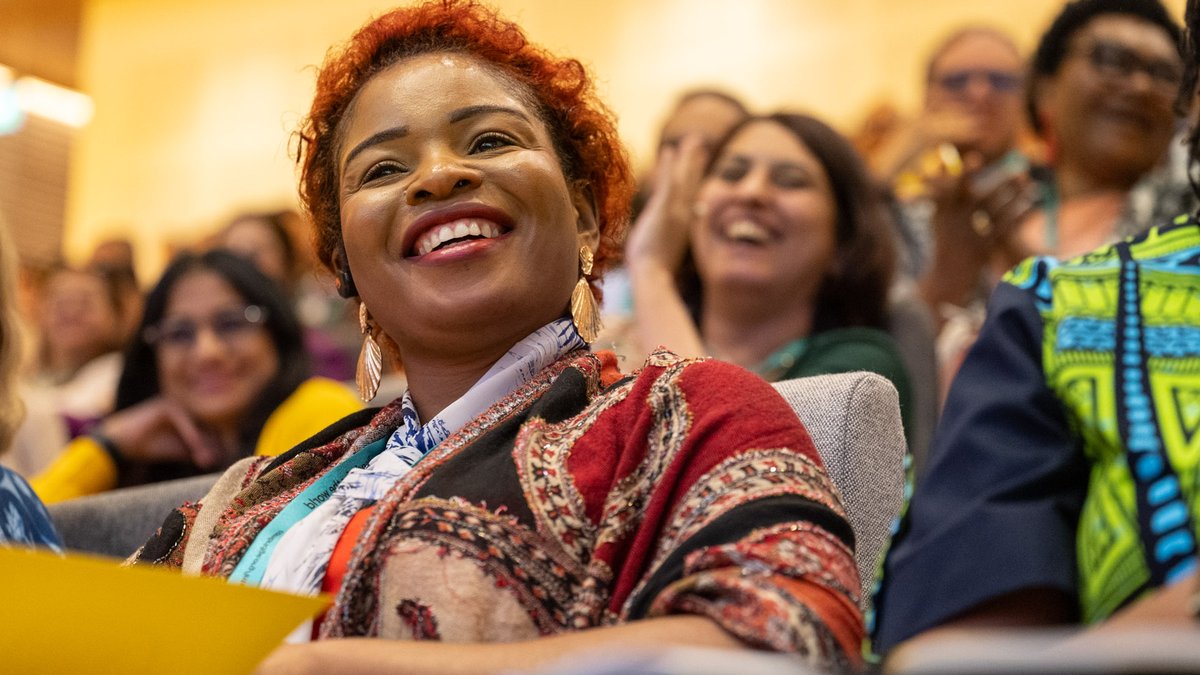
A show of hands in the auditorium revealed that almost as many attendees were on their first Cambridge Schools Conference as those who were returning after attending the meeting in previous years and venues.
Among the newcomers was Neslihan Okutgen, from Istanbul, Turkey, whose school opened just a year ago, in 2025, and who is attending her first Cambridge conference.
New schools, new connections
Okutgen’s school currently teaches from nursery through to secondary level, and her focus at the conference is squarely on connection: meeting other Cambridge school leaders, understanding the benefits of becoming a Cambridge school, and finding opportunities to collaborate. She came with no fixed agenda, just a desire to see what she can learn for her school, and for herself as a leader still shaping how her school will develop.
Dr Lusungu Kumwenda, attending for the second time, leads a more established institution. She founded Totally Kids Daycare and Nursery in Lusaka, Zambia, in 2019 to make a difference in young lives. What began as an early childhood center now spans Early Years through to Year 5, and the school is preparing to sit its first Cambridge Checkpoint assessments in 2028.
A curriculum for a global generation
For Lusungu, the appeal of the Cambridge curriculum lies in its relevance to a generation of Zambian children whose parents increasingly value global citizenship alongside local identity—looking outwards from local-to-global.
Related: Florida State University Expands AI Ecosystem
She points to the close parallels of the Cambridge curriculum with Zambia’s new National Education Policy 2025 and Competence-Based Assessment tools which focus on critical thinking, digital skills, and real-world training. “Cambridge promotes engagement, responsibility, reflectiveness and confidence through its Learner Attributes,” she says. “That’s important because education is more than just academics; it needs to develop the things that make us human too.”
The conference also addressed climate change education, a pressing issue for Kumwenda’s school. Zambia’s heavily hydropower-dependent society was hit hard by the 2024–2025 drought; falling water levels in major rivers drove up operational costs and forced her school to cut back on some activities to conserve power.
The experience moved Totally Kids towards solar energy as a resource, and gave its pupils a first-hand understanding of climate change that no textbook could replicate. Inspired by the climate change education experts at the conference, Lusungu now plans to take the approach back to Zambia and develop a climate-smart project with her students.
“[The Cambridge Schools Conference] really provided me with a platform where I then got to network with colleagues–other school leaders that have been exposed to the Cambridge curriculum for some time and from whom I can learn,” Lusungu Kumwenda said.
The gathering’s blend of newcomers and experienced educators mirrors a change in education. Schools now pursue not only academic excellence but also flexibility to address local issues with global solutions.


